
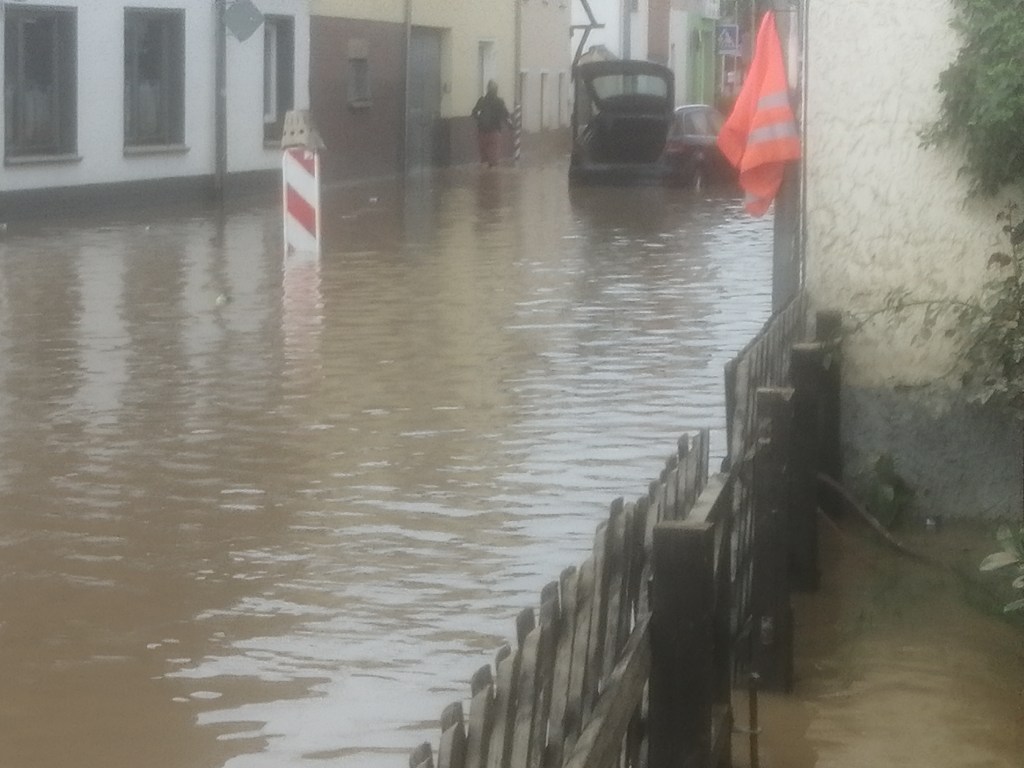
It started raining on Monday. On the third day, very heavily. While I was at work we went to check if there were any signs of leaks on the walls, that sort of things, standard during rain. Driving home from the big city was unusually slow, but that’s not news to Germans used to traffic jams. Later I had to “swim” the car across a pond that was spreading out in the middle of the road, thankfully it did a decent job. All the time I shuddered at the memory of my experiences with a red Fiesta, which in similar situations unfailingly abandoned me. My current car, however, did not fail.
It rained heavily and continuously on the way back home. At the main door, I met the neighbour from the first floor, we talked about the rain. There was no damage to both them and us, everything seemed normal. Only the backyard with the bike garage looked like a swimming pool, but the water was just ankle deep, nothing to worry about.
Around 8 pm the siren wailed. We’re used to this because there’s a police training school in town and sirens wail constantly, during the night as well, signalling training exercises for future policemen. This time, however, it sounded different – hoarser, longer, more sustained. I told the kids that something was wrong, maybe the creek had overflowed, so we should better stay home. There was nowhere to go in this rain anyway. The siren subsided, but my young daughter’s whatsapp group started spewing messages, “help, come with buckets, the kindergarten is flooded”. Since the little one will be in 5th grade now, and I’m not very familiar with street names, I couldn’t figure out which of the 5 kindergartens in town they were talking about, so I stayed home. I went to bed early, had to get up around 5.30 the next day.
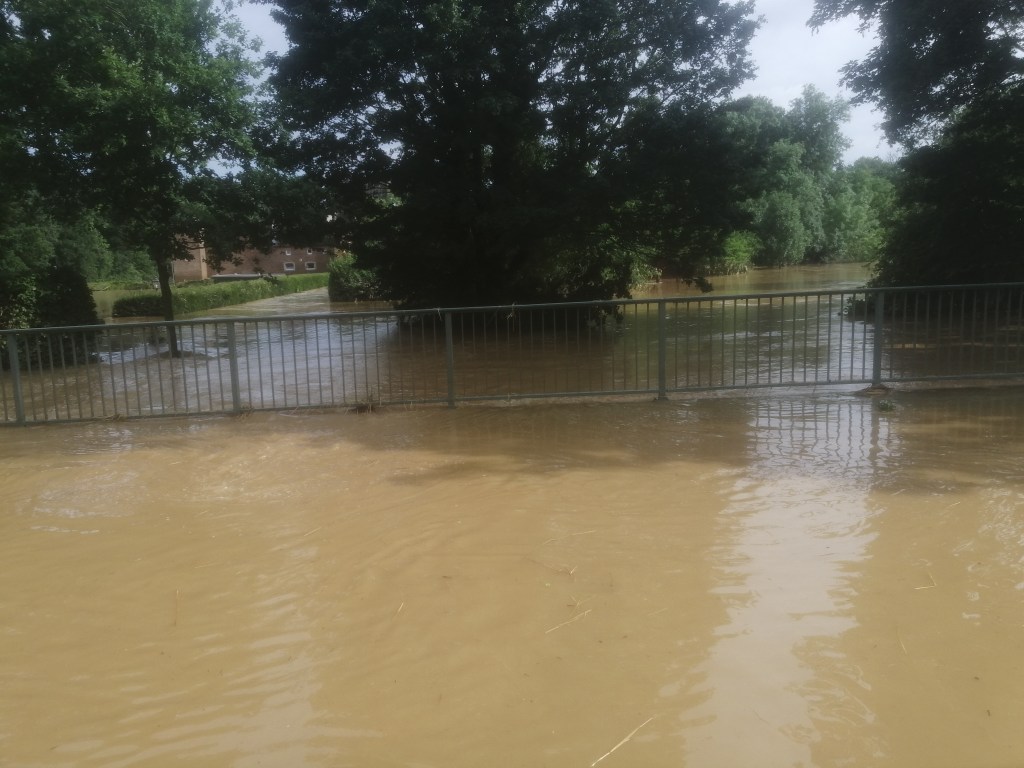
In the morning I went out at 6.15. The street was crowded, and by the time I had driven 200 metres I had already passed 5 other vehicles. Indeed, many people work shifts and leave early for work, but I had never seen such a crowd and heavy traffic early in the morning on the narrow streets of our small 15 thousand town. What’s going on with everyone today, I thought. The answer came within seconds – ruthless and overwhelming. The road I was supposed to pass was blocked by a wall of people. Behind it was a wall of water. There was no road. Our creek had surpassed all human imagination, recreating a scene from a Hollywood apocalyptic movie. Everything to the horizon was under water. Within a night the river had grown and become a lake.
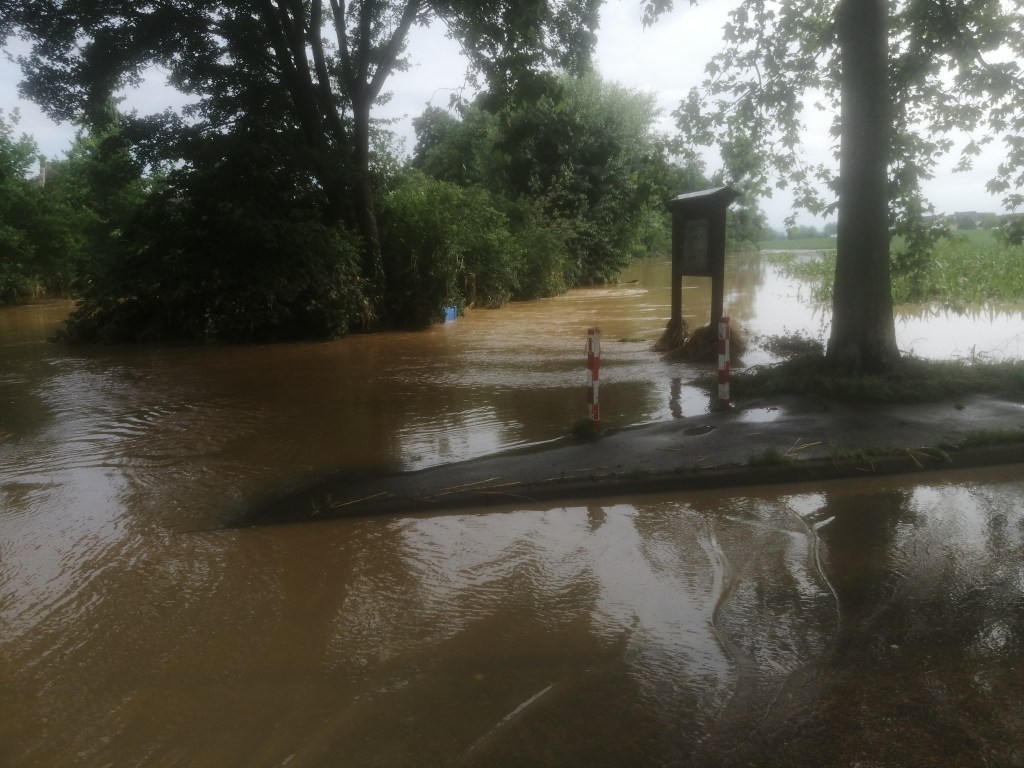
I turned the car around and took the circuitous route, there was no creek there. Now and then we rode through puddles with my swimmer on four wheels out of the town. The last houses didn’t even suspect the fate of their fellows by the river. I did not think of them either, for I had not seen them. That’s how a human brain is set up – it processes the information its eyes give it first. And the houses were not visible. That they were there, but under water, I realized after a while.
Then I saw that the surrounding fields – the area around us is agricultural, every bit of land is cultivated, at this time there is mostly wheat – have turned into ponds. The water had overflowed the road, turning it into a river. That exit was cut off, too. I turned around together with 10 other cars. It was now crystal clear why I’d passed so many cars in the morning – they had been all returning after trying unsuccessfully to make it to work.
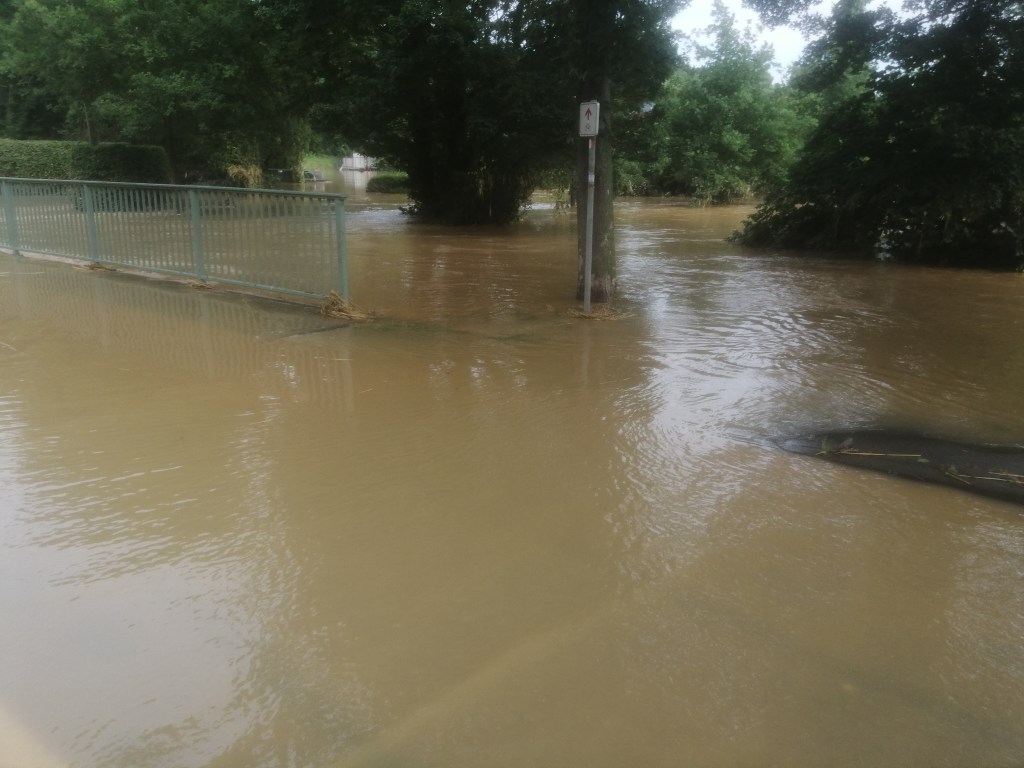
Since I was on the way to the gym, and I still had about an hour before I had to leave for work, I decided to walk around until it was time to go. I parked the car. My walk revealed the sheer drama of the situation. The main street of our town, which the children cross to go to school and which is about 500 yards from our home, was completely under water. The water hadn’t just flooded everything, it was flowing violently and hurriedly, it wanted to conquer as much land as it could, yet for the first time it was able to do that, so it had to make the most of it. Had almost succeeded. All three miles, if not more, of the road – from one side of the town to the other – were under water. Along its bed the river was rushing wildly, as if to prove to the people, who could not believe their eyes, that they were not masters of the world.
Its determination seemed to be untamable. The sight was ravaging. Of the surrounding houses, only the roofs jutted out. The apple trees in the front yards were submerged in water up to their tops. In the center of the lake, in fact on the center line of the road, several cars were moored like whimsical and absurd buoys. I knew one of them, it came every morning at 6 o’clock to the 97-year-old woman who lived across from us -a homecare nurse. I wonder why she ever tried to cross all that water. Or maybe there were just a few puddles around 5.30, then suddenly the water rushed in and sent her halfway across. That’s what a couple of women from the affected houses in the street next to us said this afternoon – the water came in with amazing speed. I wonder if the nurse was able to serve her patients this morning?
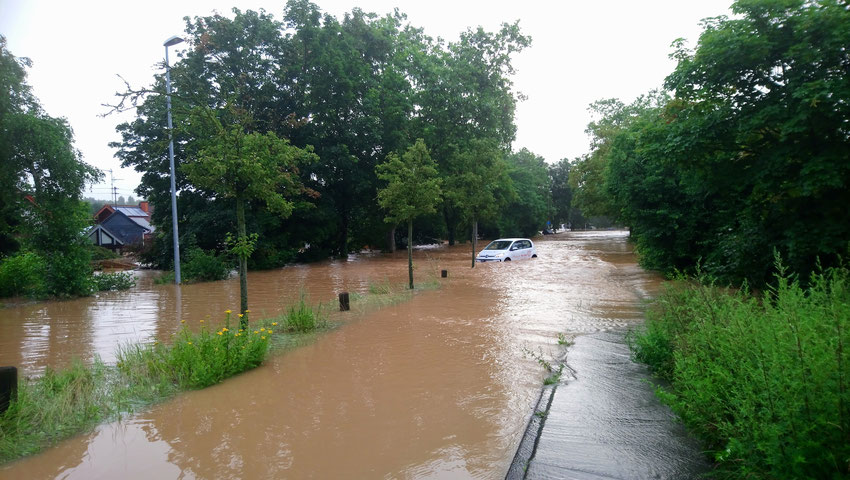
My original intention to walk to the upper part of the town was obviously not going to be accomplished. The river had split it in two and left no bridge, road, ford or any way to cross over. Like the Berlin Wall on the other side of Germany. Made of water.
I decided to go and look for a detour via the neighborhood. Although I had walked by about 20 people with horrified eyes, I wasn’t prepared for the sight. The street that all the buses ran on, that led to the highway, that had the post office, the 3 pharmacies, the 2 candy stores, the ice cream parlour, a favourite place of the kids, was not there. It was gone. The heart of the town was drowned. Water flowed calmly and without remorse all over the center. Here it was no longer rushing. It had taken over everything. The colourful roofs of the cars dotted its monotonous yellow-brown domination, but could not cheer it up. If the owners of the drowned houses wished, they could walk on them, on the roofs of their own drowned cars, to get out. The whole town seemed to be outside, everyone talked in hushed tones. All were covering their mouth with a hand, however not because we had all forgotten about the masks and the pandemic.
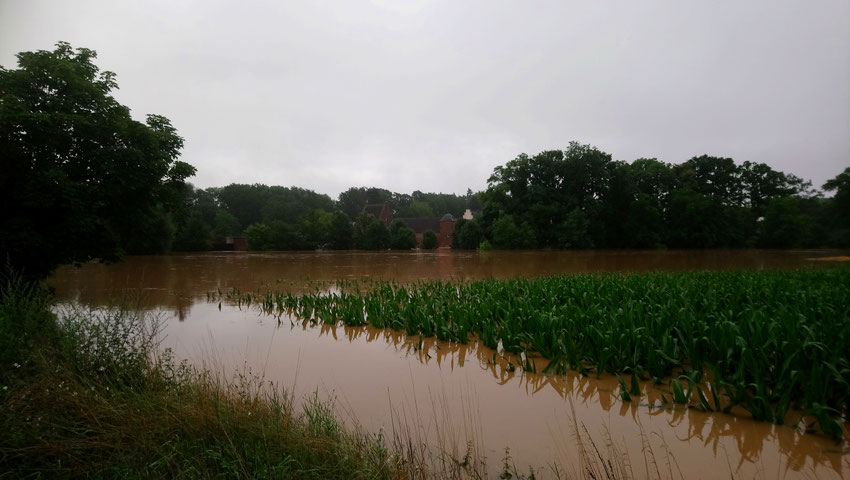
The blank stupor on people’s faces resembled that of the rabbits and quails, huddled motionless on the remnants of unwatered land on the other side of the city, amid the turned into pools fields. The animals weren’t moving, just standing and watching as if mesmerized. Terrified and uncomprehending. Just like the humans. Just like the young corn field by the riverside lane with leaves sticking out of the flooded field resembling green hands begging for help. Standing alone just like the outstretched torch of the Statue of Liberty from “The Day After Tomorrow”. It was eerie.
I didn’t have time to give in to the heartbreak, I had to get to work. Four of the town’ five exits were completely cut off. Well, you could get through, but only by boat. Just like the innumerable rescue teams were doing, by the way – criss-crossing the devastated streets with boats to prevent the devastation of lives. They were many. They helped silently.
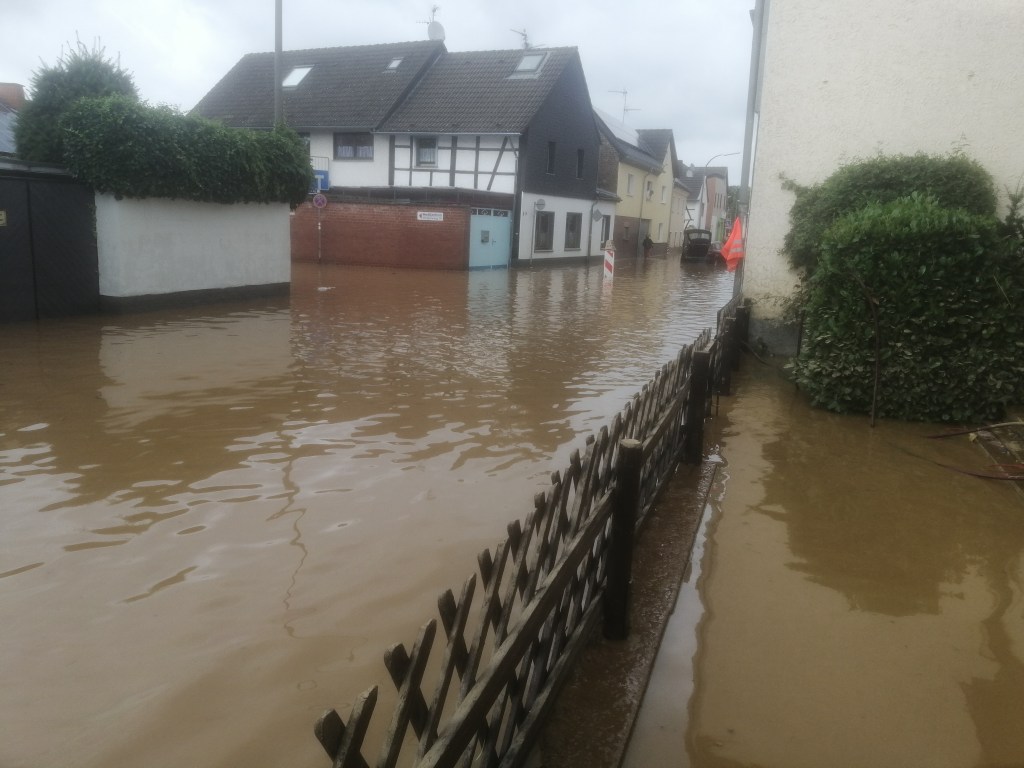
I decided to take the fifth exit, the viaduct over the highway, it was on high ground and accessible, no damage done. By the time I got to the car I had informed the disbelieving faces at almost all the windows that yes, all the exits, with the exception of the overpass, were under water. Someone added that no one would be able to go to work today. Well, I was going to try. I started the car and left. It was a fighter, had already proved it, would cope with some water on the way.
The first thing that struck me was the vast number of trucks clogging all the roads. What on earth were they doing in the villages? Over the next few minutes, it was clear: all the roads within a radius of about 15 km were under water. There was a dry stretch or two, where trucks and cars were roaming like wild sheep trying to get out of the water trap. It was mission impossible. There was no need to even try – the abandoned cars of the first unsuccessful daredevils were strewn across the roadway like dire warnings. There were cars everywhere. In the middle of the lane, across the road, hanging over the bridge railings, on the guardrails, on the turns, at the doorways of houses. Trunks open, doors smashed, wet grass and straw sticking out of their radiators like the teeth of an unknown species of dinosaur. Some were one on top of the other. Others leaned against each other as if seeking support for their shattered fates. And the fate of them all was clear – a platform and a junk yard. Scattered in utter disarray, as if they belonged not to the neat Germans but to aliens from some watery land out of the movies.
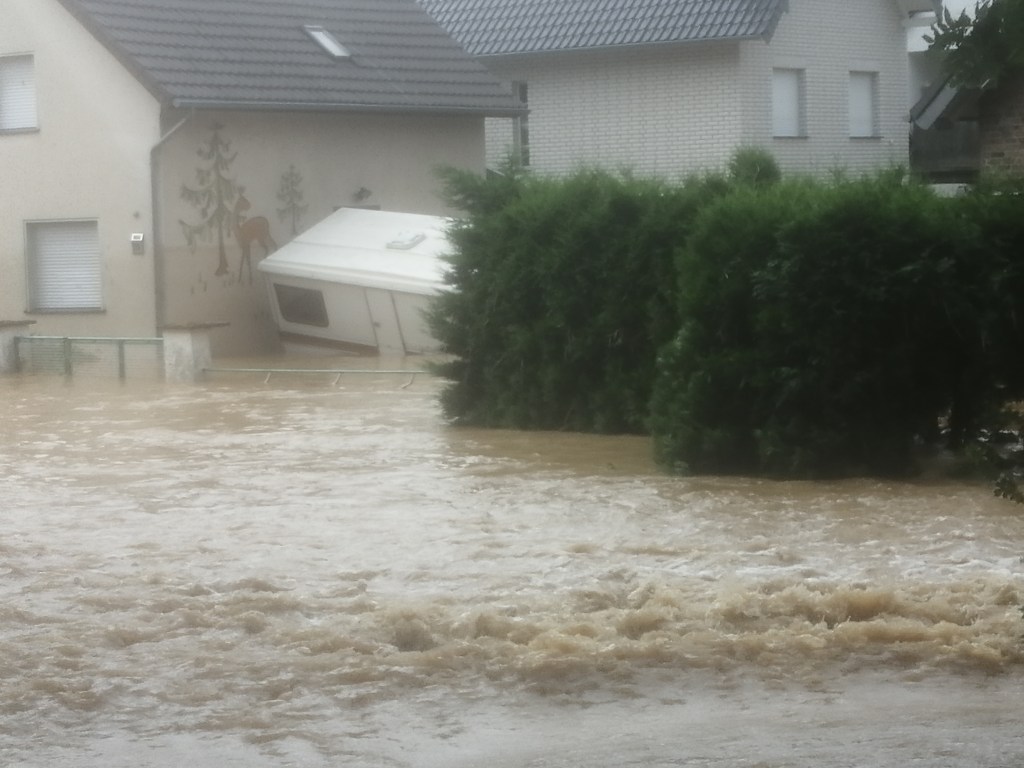
The disaster was devastating. Its scale inconceivable. The damage was horrendous.
The next day I would see the beautiful, orderly, tidy German towns looking as if they had just come out of war. Or a meteorite had fallen on them. The water would recede, taking the asphalt with it and leaving the streets like sucked off bones. Mud and jutting stones. A lunar landscape. There was a gas station somewhere on the road, clean and shiny until the day before. Now it looked like it came out of that sad Wim Wanders film, ”Paris, Texas”. Bogged down in mud, with broken windows and fuel pumps crooked as old men’s fingers.
I tried to call the office, saying it was impossible to get there. Until then, I hadn’t noticed there were no phones. That there was no internet I had realized when I woke up that morning – it was the first time I ever saw the modem glow red. We had no communications. Back I went and woke the children. They had to see this I hope they will never have this experience again.

At home, while I was waiting for the kids to get up and get ready to go out, I could hear a constant buzzing. A monotonous sound, annoying and irritating. I thought for sure the basement of some neighbouring house must have flooded, even though there was no damage on our street, and people had started a pump.
It turned out to be a helicopter. Helicopters, three. The kids said they had been hearing them all night, I hadn’t noticed until then. They circled over the town, occasionally stopping somewhere, dropping ropes that people were climbing on. We were filming like paparazzi – we had only seen such a thing in the movies. Later, when the helicopter landed in front of us and a pilot staggered out of it, overcome with fatigue, to be replaced by the backup, and a woman sobbed herself out, we continued to document the shear dread and commitment with all the respect and awe of which we are capable of. Later, when further down on the town largo, the place whose residents we had envied for the past three years for the gorgeous view and the lovely houses, we saw the helicopter just stop over something reddening over the water, we realized the true scale of the disaster.
All the houses by the river, the kindergarten from the whatsapp messages (apparently in this place), the streets and bridges were under water. The river had spilled like the ancient Egyptian Nile, stretching its yellow torso across several streets. About 500 meters on either side of it were completely swallowed. The calamity had engulfed half the town. Helicopters were rescuing people. The sirens of the fire trucks could be heard everywhere.
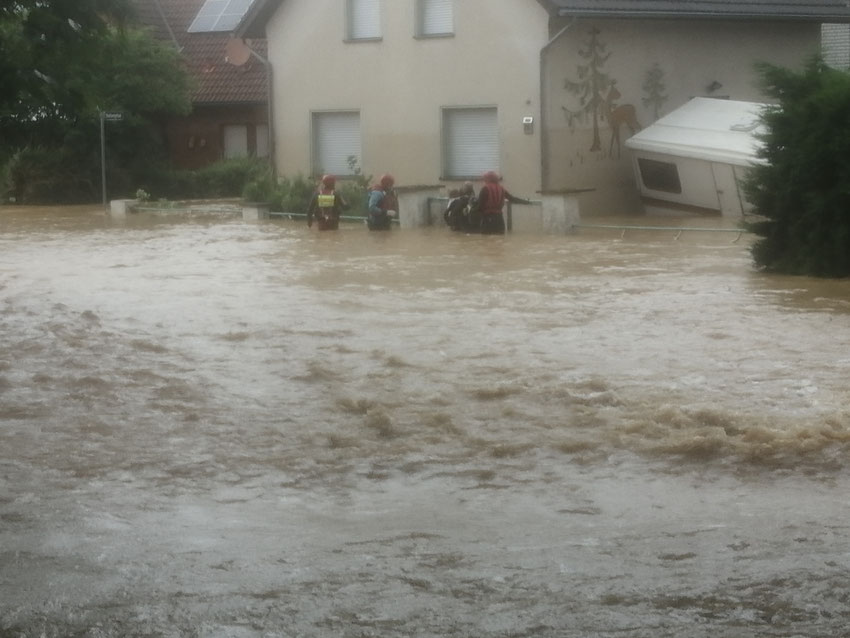
We saw firemen up to their waists in water carrying small children in their arms. Behind them, parents were stumbling, probably choking back tears. We saw firemen sleeping on the boats and snoring thunderously. Others had fallen asleep right on the street, laying their heads on the curb. Still others were perched on the sidewalk drinking Coke. Perhaps no one wanted to see water. They had been on duty since 8 o’clock the night before. My watch reported that meant 16 hours fighting for the lives of strangers. Then we heard on the radio that two of the now 173 dead were firefighters attempting rescue. The little town was teeming with people, frantic with fear; firemen, exhausted but helping; policemen with swollen sleepless eyes; all sorts of rescue equipment, backhoes, bulldozers, huge trucks whose purpose was unclear to me, equipped with all sorts of rollers, hoses, hose reels, grapnels, and rescues.
The darkened walls of the houses registered with unrelenting clarity how far the water had reached. At least a meter, in some places two. The shattered glass of the shops, the mud outside their otherwise friendly doorways, the destruction and chaos continued to tell the story of the apocalypse. Muddied up to the roofs, cars spreading their broken glass doors, asked question after question. Had the rushing water crushed them or the desperate people trying to save themselves…?
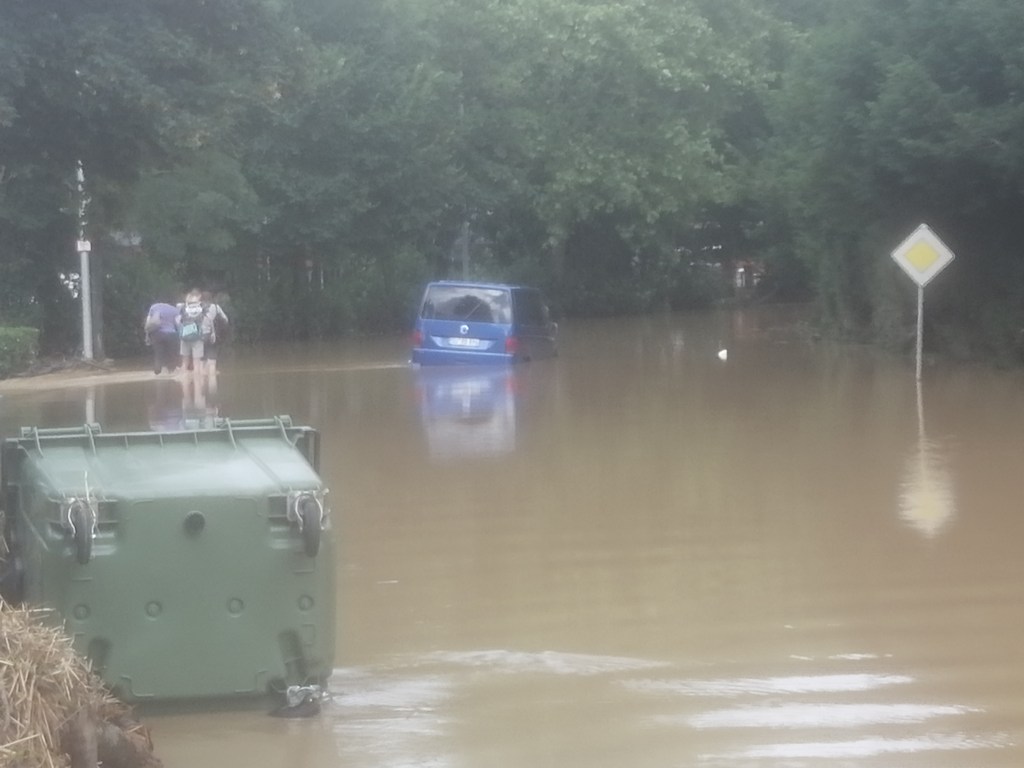
There was a woman weeping out there. She had been crying all morning, all day. Used to have a farm and animals – cows, chickens, pigs. They must have had names too – Bertha the cow, Ula the hen, Hans the pig. Of all the animals there were only three pigs left. The others, dozens of head of cattle, drowned. Their names were not among the 173 victims. They are among the incalculable destruction and damage.
On a wall lit by the brief sun, swayed baby clothes. Polly came into this world a month ago, weighing 3,000 grams, 52 centimeters tall. The happy parents had hung balloons, baby clothes, and other colorful evidence of their joy under the windows of the house. Germans love to share their happy moments with others, no matter that we consider them cold and heartless. The clothes are now wet, dirty and sad. A few inches below them, the water has dispassionately left its dark mark. Hopefully Polly is safe, surely some rescuer must have got her up the rope to a secure place in the helicopter.
My older daughter sits silently beside me in the car. At one point she can’t stand it anymore and simply closes her eyes. “I don’t want to look any longer,” she says. I feel like crying too.
Witnesses to the devastation tell their stories speechlessly in the streets. They are piled outside every house. Sad, dirty and tattered couches that a day ago were bright, beautiful and laid their back amiably under bouncing children’s feet. They may as well have been brand new, like the one belonging to a woman in our town. Crumbled tables that held mugs of beer and plates of wurst tell of days of laughter and joy through rainy tears. Mattresses leaning wearily against the wet walls have spread their silent maws like some unknown mythical monsters. Shoes, pots, and forks are scattered creepily in the midst of the street lanes.
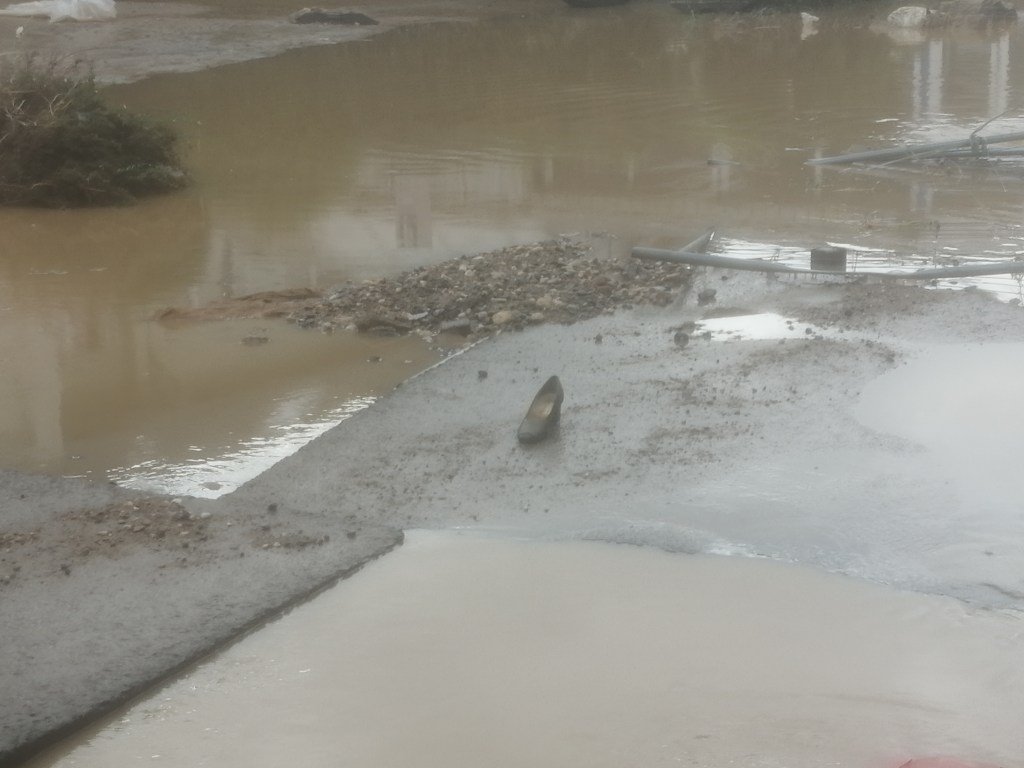
Broken windows and vials strewn on the ground in the pharmacy. The ice cream parlor, covered in mud and toppled over tables and chairs. The gift and balloon shop that greets us with eyes closed in anguish and a pile of mud and trash outside the door. Handwritten notes hang everywhere. Not going to open. Some have dropped in the mud, no one needs them any way.
At places, grotesque-repulsive sights of chemical toilets turned upside down, I don’t even want to think about what they’ve dumped on the ground. People yesterday, however, buckled their pants and waded into the mire without hesitation. Men and women. Their homes were somewhere in there. Their whole lives.
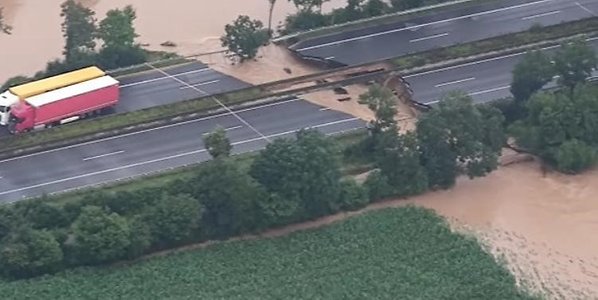
The disaster is mind-boggling. Over 50 000 people have no electricity. The flood has literally swept away parts of the state’s busiest highway and one of the busiest in Germany. Sinkholes of about 3 metres are yawning. Several of the largest dams may break their embankments any moment. Maintenance crews are on duty around the clock. Preliminary estimates put the damage at around EUR 1 billion. In my opinion, it could be more. The casualties are 173. So far. Unknown number of people missing.
It has been reported that most of the victims are from the nearby county, the town with the big and nice shops where we usually shop when we want to treat ourselves. We may have seen the eyes of the deceased, walked by some of them on the streets. We don’t know their names. News reporters don’t know them either. In the town in whose hypermarket I lined the gondolas when I first came to Germany, a very beautiful town about 40 kilometres from us, with an picaresque river meandering through it, steep streets and white limestone cliffs on whose slopes they grow tiny grapes and make sour wine from them, the flood has also carried away houses. Just like that, it grabbed them and took them somewhere – with the roofs, the paintings on the walls, the carpets on the floor and the lamps on the ceiling. They say their people are missing. Nobody knows how many they are, and they are not able to look for them. They also say, “Don’t come here. It’s scary. “
No one cries. There is enough water.
On the radio, a man explains breathlessly how all the appliances are out of order and his entire kitchen is in ruins. He has small children. He doesn’t have a stove anymore. Surely he was talking fast so he wouldn’t sob. After every word he keeps repeating “we’ll see”. The hosts repeat “dramatic”, “disaster”, “devastation”. I already know all the German words to describe a deluge: ‘flooded’, overflowing’, ‘inundated’ … But I know another, biblical one.
Apocalypse.
 Tradevarium